


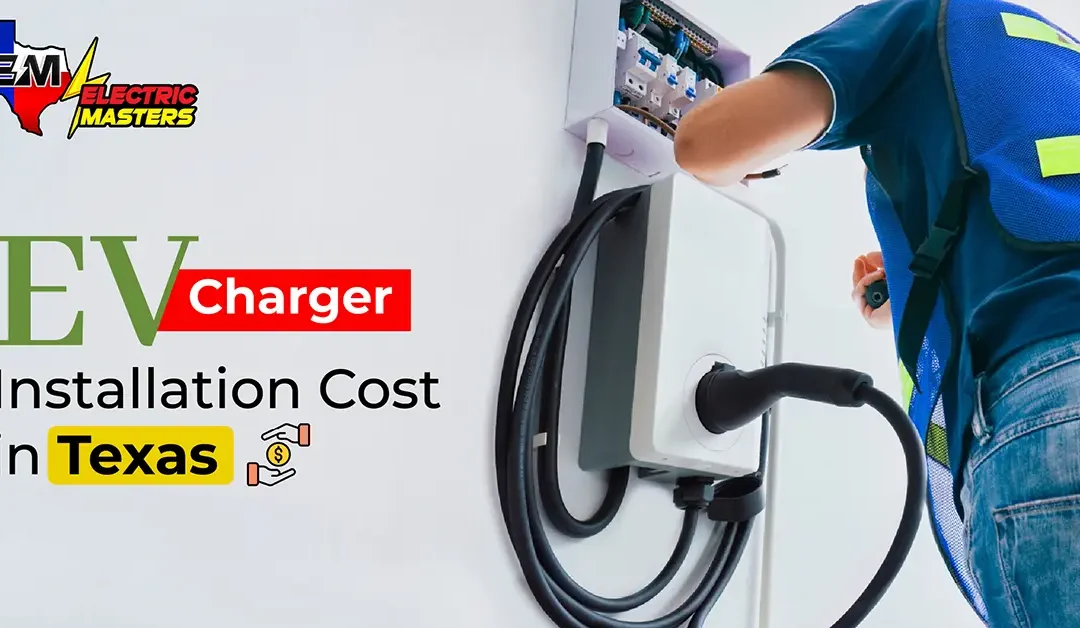
In Texas, the average cost to install an EV charger is around $800, but it can reach $2,500 for a typical Level 2 home charger installation. The actual price depends on your electrical panel, the charger’s placement, cable length, permit requirements, and any additional electrical work needed.
Typically, a charger close to the main panel is more affordable. If the electrician needs to run wiring across the house, upgrade the panel, dig a trench, or install the charger outdoors, the price can increase.
Before buying a charger, get your home’s electrical system checked. This can help you avoid buying a model that needs more power than your panel can safely provide.
Average EV Charger Installation Cost in Texas
Most EV owners choose a Level 2 charger for home use. It works on a 240-volt circuit and charges much faster than a normal wall outlet.
Here is a basic cost idea:
| Work Required | Estimated Cost |
|---|---|
| Level 2 charger | $400 to $1,000 |
| Basic installation | $400 to $1,200 |
| New 240-volt circuit | $300 to $900 |
| Permit and inspection | $50 to $300 |
| Panel upgrade | $1,500 to $4,000 or more |
| Outdoor trenching | $500 to $2,000 |
| Long cable run | $300 to $1,500 |
These figures are only a guide. The actual quote will depend on your property and the amount of work involved.
Why EV Charger Installation Prices Change
The charger may look like a simple wall-mounted unit, but the work behind it can vary from one home to another.
Distance Between the Panel and Charger
The shorter the distance, the lower the cost in most cases.
Suppose your electrical panel is inside the garage and the charger goes on the wall beside it. The electrician may only need a short wire run and a new breaker.
Now consider a home where the panel sits outside and the parking space is on the other side of the building. The job may need more wire, metal conduit, drilling, wall access, and extra labor.
That difference can add hundreds of dollars to the project.
Condition of the Electrical Panel
A Level 2 charger adds a heavy load to the home’s electrical system. The electrician must check whether the current panel can handle it.
Some newer homes already have enough spare capacity. Older houses may require more work, especially if the panel is already powering air conditioning, electric cooking, heating and other high power appliances.
The electrician may suggest:
- A new breaker
- A subpanel
- A panel replacement
- A service upgrade
- A load control device
A load control device may allow the charger to reduce power when other appliances are using more electricity. In some homes, this can save the cost of a full panel upgrade.
Charger Size and Power
Level 2 chargers come in different power ratings. Some draw 32 amps, while others draw 40 or 48 amps.
A higher rating does not always mean it is the right choice.
Your EV has its own charging limit. If the car can only accept 32 amps, installing a 48-amp charger will not make it charge faster. It may only raise the installation cost because larger wiring and a bigger breaker may be needed.
Choose the charger according to your vehicle, daily driving, and panel capacity.
Indoor and Outdoor Setup
Installing a charger inside a garage is often easier.
Outdoor charging points may require weatherproof fittings, sealed conduit, stronger mounting and protection from rain and heat. A detached garage or open parking area may also require underground wiring.
These details can raise both material and labor costs.
Permit Charges
Many Texas cities require a permit for a new 240-volt charging circuit. Some areas may also ask for an inspection after the work is finished.
Permit fees are not the same in every city. Ask the electrician whether the permit charge is included in the quote.
How Much Is a Charging Station?
A home charging station usually costs between $400 and $1,000.
Basic models handle normal charging without many extra controls. More expensive chargers may offer:
- Wi-Fi connection
- Mobile app access
- Charging schedules
- Energy usage reports
- Adjustable power levels
- Longer charging cables
When asking how much is a charging station, remember that the charger price is separate from fitting and wiring charges.
For example, a charger may cost $550, while the electrical work costs another $700. The full cost would then be around $1,250.
Cost of EV Charging Station at Home
The cost of an EV charging station at home depends more on the house than many people expect.
Take two simple examples.
A homeowner has a modern electrical panel inside the garage. The charger goes on the wall next to it. The charger costs $500, and installation costs $600. The total comes to $1,100.
Another homeowner buys the same charger, but the panel is old and the parking spot sits far from the house. The job needs a panel upgrade, a long cable run, and outdoor conduit. That project may cost $3,500 or more.
This is why an electrician should check the site before you buy the equipment.
Electric Masters can inspect the panel, measure the wiring route, and suggest a charger that matches the home and vehicle.
How Much Does It Cost to Charge an Electric Vehicle?
To work out how much it costs to charge an electric vehicle, check your electricity rate and the number of kilowatt-hours added to the battery.
For example:
- Energy added: 60 kWh
- Electricity price: $0.15 per kWh
- 60 × $0.15 = $9
In this case, adding 60 kWh costs about $9.
The real cost may be slightly higher because some power is lost during charging. Your monthly bill will also depend on how many miles you drive and how often you charge.
Home charging is often cheaper than using public fast chargers. Some electricity providers also offer lower prices during off-peak hours, so overnight charging may save you even more money.
Ways to Keep the Cost Under Control
You can avoid some extra charges with a little planning.
- Place the charger close to the panel.
- Check the panel before buying the charger.
- Choose a charger your vehicle can fully use.
- Ask about load control before agreeing to a panel upgrade.
- Compare plug-in and hardwired options.
- Check whether your electricity provider offers rebates.
- Ask for a written quote with labor, materials, permit fees, and equipment listed separately.
Do not buy the most expensive charger simply because it has a higher power rating. A lower-rated charger may still fully charge your car overnight.
Why an Electrician Should Handle the Work
An EV charger runs for several hours and draws more power than many common household devices. Poor wiring can lead to hot cables, breaker trips, damage to the charger, or fire risk.
A licensed electrician should check the load, select the right breaker, use the correct wire size, connect the grounding, and test the unit after fitting it.
You can link internally to pages about: Residential electrical services Electrical panel replacement 240v outlet installation Home electrical inspections Summary The cost to install an EV charger in Texas is typically $800-$2,500 for a Level 2 home charger. A simple garage installation may be at the low end of that range, while an old panel, outdoor wiring, trenching or a long cable run can raise the cost.
The best way to know the real cost is to arrange an electrical inspection before purchasing the charger. Electric Masters can check the home, explain the required work, and provide a clear quote based on the actual setup.
FAQs
What is the average cost of EV charger installation in Texas?
Most Level 2 home installations cost between $800 and $2,500.
How much is a home EV charger?
The charger usually costs between $400 and $1,000 before installation.
Does every home need a panel upgrade?
No. It depends on the panel size and available electrical capacity.
Can I charge an EV from a normal outlet?
Yes, but charging will be much slower than a Level 2 setup.
How long does installation take?
A simple job may take a few hours. Larger electrical work can take longer.